


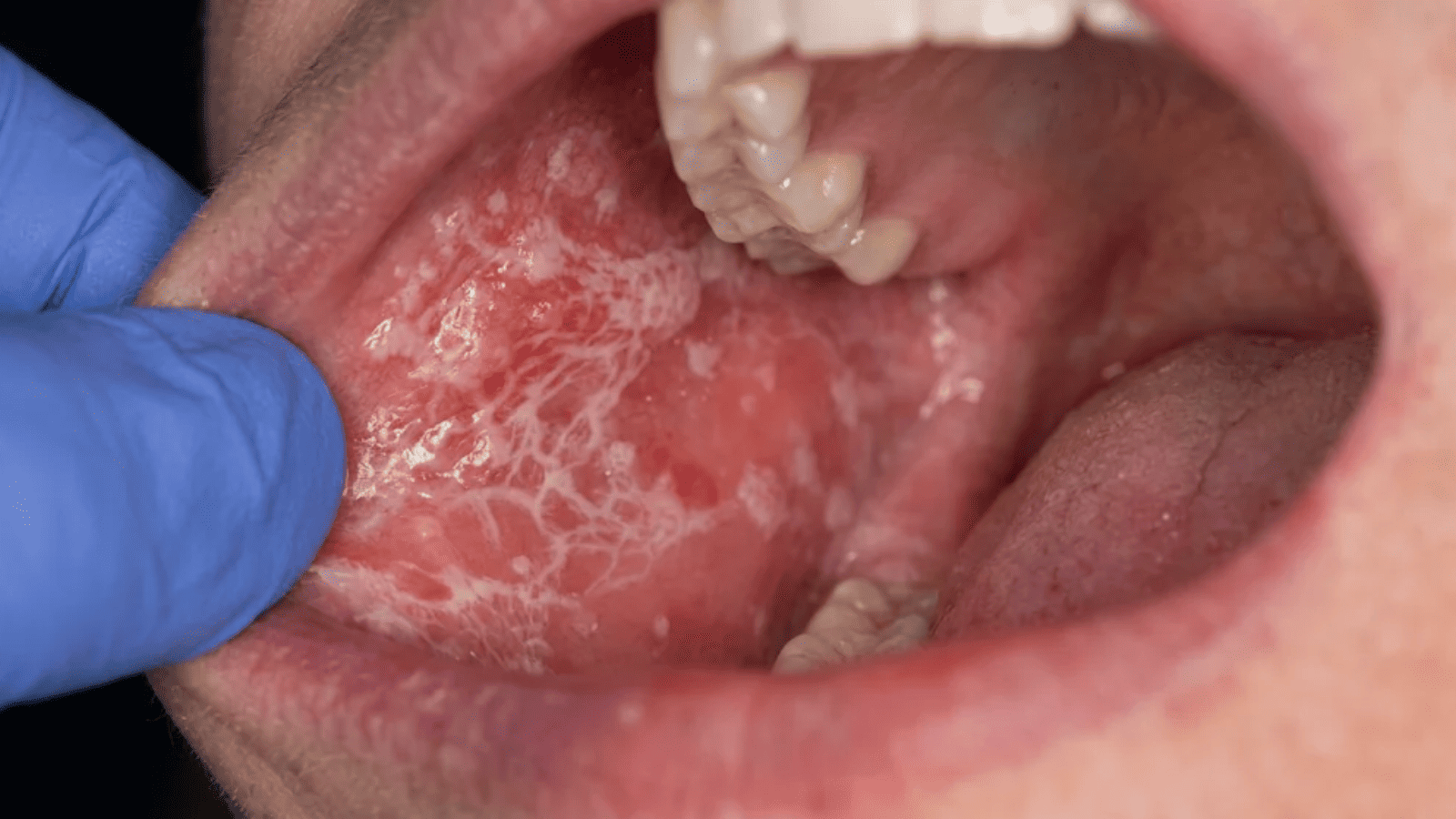
Emerging evidence reinforces the clinical value of triamcinolone acetonide in managing oral lichen planus (OLP), particularly when balancing symptom control against the risk of oral candidiasis.
Oral lichen planus is a chronic inflammatory mucosal disease that often requires prolonged or repeated treatment. Topical corticosteroids remain the mainstay of therapy, with triamcinolone acetonide widely used to control inflammation and relieve symptoms.
A retrospective cohort study published in Oral Diseases in August 2026 evaluated 312 patients receiving topical corticosteroids for OLP, with a median follow-up of 18 months.
The researchers investigated oral candidiasis, an important complication associated with topical corticosteroid therapy.
Overall, 25% of patients developed microbiologically confirmed oral candidiasis during follow-up.
Interestingly, patients receiving triamcinolone acetonide 0.3% showed a lower observed incidence of candidiasis than those receiving clobetasol propionate 0.05%.
At six months, 85.2% of triamcinolone-treated patients remained free of candidiasis, compared with 73.8% of clobetasol-treated patients.
After adjustment, clobetasol showed a 48% higher estimated candidiasis incidence (IRR 1.48; 95% CI 0.96–2.28), although this difference was not statistically significant.
Importantly, patients with more severe OLP were more likely to receive clobetasol, limiting direct safety comparisons.
Triamcinolone has established clinical evidence supporting its use in symptomatic OLP.
A randomized controlled trial demonstrated that topical triamcinolone acetonide 0.1% significantly improved clinical scores compared with placebo after three weeks (p = 0.031).
A Cochrane systematic review also supports topical corticosteroids for reducing OLP-related pain, although the certainty of evidence remains limited.
The 2026 study identified poor oral hygiene, removable partial dentures and greater disease severity as important factors associated with candidiasis.
This highlights the value of appropriate corticosteroid selection, maintaining oral hygiene and regular clinical monitoring.
Triamcinolone acetonide remains an evidence-supported treatment option for symptomatic oral lichen planus.
Its demonstrated clinical activity, together with encouraging observational safety findings, supports its use in appropriately selected patients.
However, candidiasis remains a potential complication, and the latest study does not establish that triamcinolone is definitively safer than clobetasol.
Chlorhexidine demonstrated statistically significant superiority over povidone-iodine in preventing overall and superficial surgical site infections.
The clinical advantage is modest but meaningful, reinforcing the importance of selecting antiseptics based on comparative evidence rather than convention alone.
| PRODUCTS | QTY | PRICE | VALUE in INR |
|---|
| PRODUCTS | QTY | PRICE | VALUE in INR |
|---|