


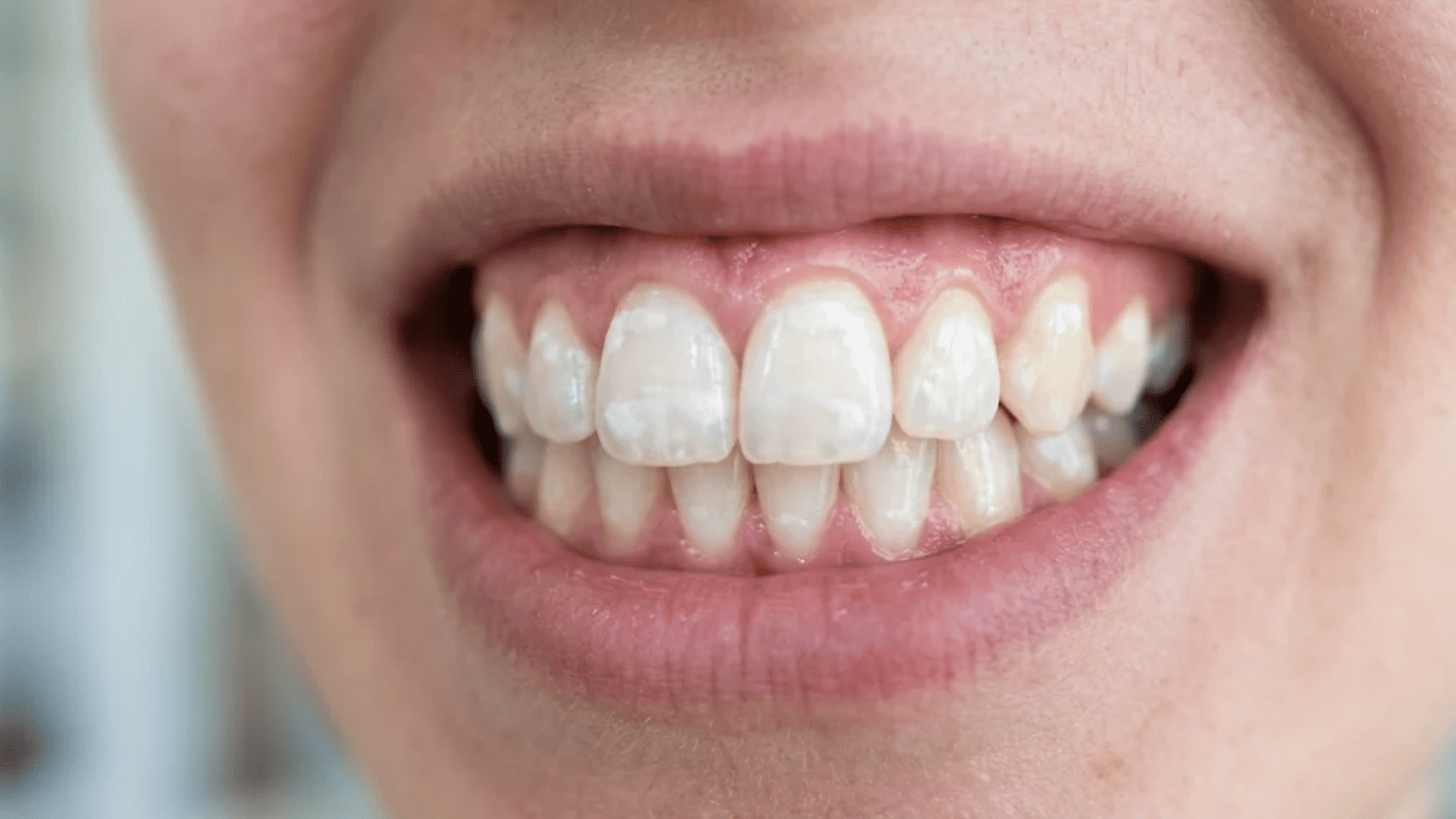
White spot lesions (WSLs) are visible signs of early enamel demineralisation. During fixed orthodontic treatment, brackets complicate plaque removal, increasing the risk of these lesions. Prevention relies on effective oral hygiene and fluoride-based care, while bBb glass toothpastes are being studied as additional options.
Bioactive glass materials, including calcium sodium phosphosilicate (NovaMin), can release calcium and phosphate ions and support mineral deposition under suitable conditions. This mechanism is promising, but laboratory activity does not automatically establish better clinical outcomes.
A 2025 systematic review by Jahanbin and colleagues evaluated 13 studies: four clinical trials and nine laboratory investigations. Three clinical trials contributed to a meta-analysis involving 146 patients, with 73 in each comparison group.
NovaMin-containing toothpastes showed no statistically significant advantage over fluoride toothpaste for white spot lesion outcomes (standardised mean difference −0.29; 95% confidence interval −0.64 to 0.05; P=0.10). Heterogeneity was low (I²=11%), and the reviewers rated the certainty of clinical evidence as moderate.
Importantly, a nonsignificant result does not prove that the treatments are equivalent. Some test toothpastes also contained fluoride, so these comparisons cannot isolate the independent contribution of NovaMin. The trials also examined different endpoints, including lesion development and changes in existing lesions. Accordingly, the pooled estimate should not be presented as definitive evidence for every bioactive glass formulation.
The laboratory findings addressed a different comparison. Across three studies involving 87 extracted teeth, specimens receiving bioactive glass had lesions approximately 64 micrometres shallower than untreated controls (mean difference −63.98 μm; 95% confidence interval −92.26 to −35.71; P<0.00001).
However, heterogeneity was substantial (I²=80%), and this evidence was rated very low certainty. These experiments do not establish superiority over fluoride toothpaste in patients.
This distinction matters because clinical conditions introduce additional variables, including plaque accumulation, dietary acid exposure, salivary dynamics and adherence to recommended brushing. Short follow-up and limited clinical sample sizes further restrict the conclusions that can be drawn.
For dentists managing orthodontic patients, bioactive glass is a scientifically plausible remineralising ingredient, not a demonstrated replacement for fluoride. This review does not establish a clinically important added benefit over fluoride toothpaste.
Individual risk assessment, plaque control, appropriate fluoride use, dietary counselling and regular monitoring remain central to prevention and management.
These findings cannot be extrapolated to unrelated indications, such as management of dentinal hypersensitivity.
Larger, longer clinical trials that separate prevention from treatment and compare clearly specified formulations are needed to identify where bioactive glass adds meaningful benefit.
Jahanbin A, Hanaei R, Bardideh E, Omidkhoda M, Zia F. Effect of bioactive glass toothpaste on the white spots around orthodontic brackets: A systematic review and meta-analysis. Journal of Dental Research, Dental Clinics, Dental Prospects. 2025;19(1):9–17.
| PRODUCTS | QTY | PRICE | VALUE in INR |
|---|
| PRODUCTS | QTY | PRICE | VALUE in INR |
|---|