Time-Course of Clinical Efficacy of a 5% Calcium-Sodium Phosphosilicate Toothpaste on Dentine Hypersensitivity
Dentine hypersensitivity is a frequent complaint, and patients often expect early relief. A recent randomized, examiner-blind study J Dent, 2026) evaluated the short- and medium-term efficacy of a 5% calcium-sodium phosphosilicate CSPS) toothpaste.
The study included 215 participants with clinically confirmed hypersensitivity. They were assigned to twice-daily brushing with either a 5% CSPS toothpaste containing fluoride or a standard sodium fluoride-silica toothpaste. Two nonadjacent sensitive teeth per participant were selected for assessment.
Sensitivity was measured using two methods:
Schiff score for response to air stimulus
Tactile threshold using a Yeaple probe
Assessments were done at baseline, day 3, day 7, day 14, day 28, and day 56. The CSPS group showed a statistically significant reduction in hypersensitivity by day 3 (p < 0.0001 . The reduction increased steadily over the 8-week period. At all time points, the CSPS toothpaste produced greater improvement than the control toothpaste (p < 0.001 .
Patient-reported outcomes were measured using the DHEQ48 questionnaire. Scores in the CSPS group improved over time, indicating reduced daily impact. Differences between groups were not statistically significant.
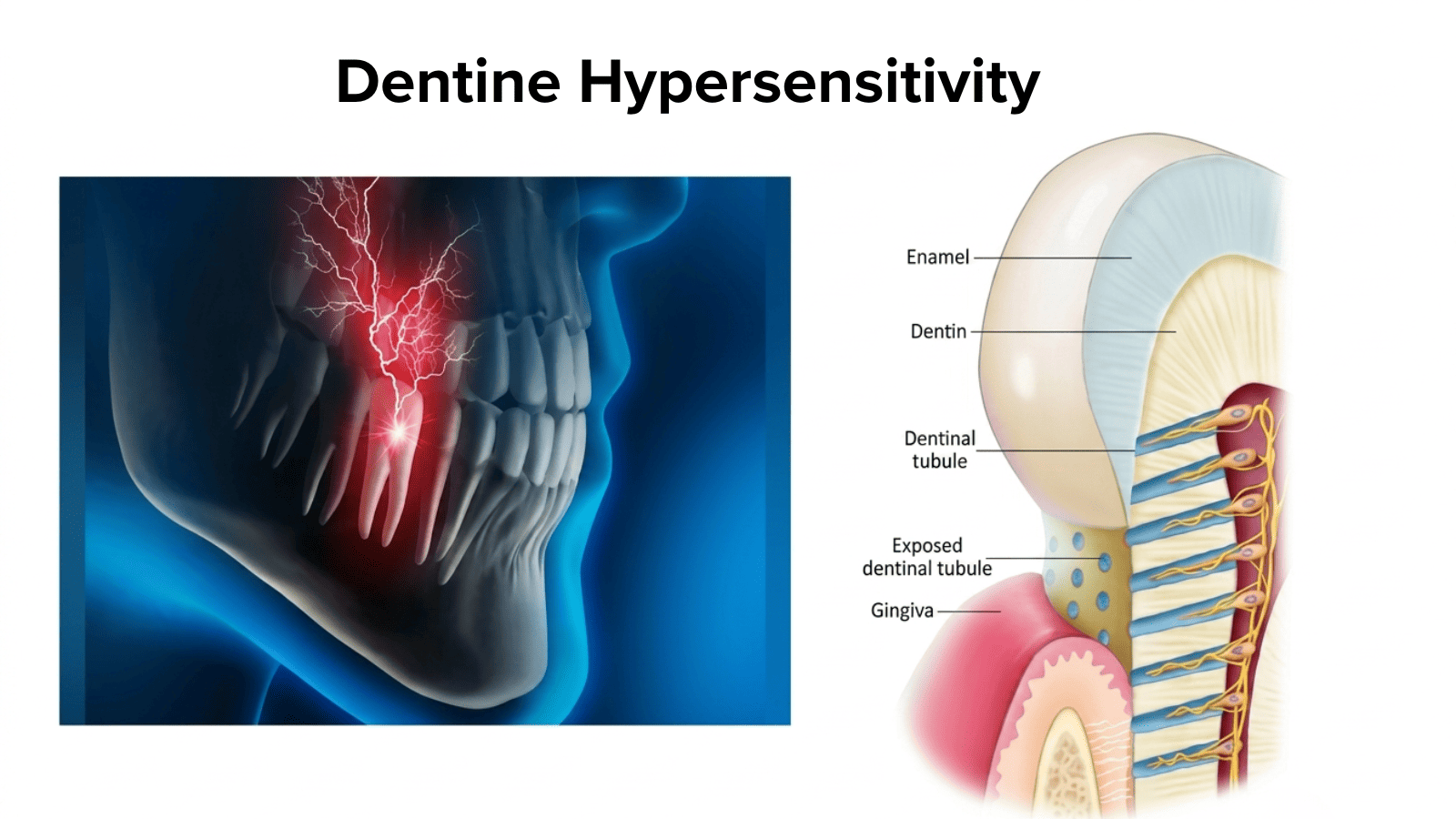
CSPS acts by releasing calcium and phosphate ions, which deposit on exposed dentine and form a mineral layer. This reduces dentinal tubule permeability and limits fluid movement, which is associated with pain.
The main clinical point is the early onset of action and continued improvement with regular use. Compared to a standard fluoride toothpaste, the 5% CSPS formulation provides greater reduction in hypersensitivity across both objective measures.
This supports its use in patients requiring both early and sustained control of dentine hypersensitivity.
Reference:
Creeth J, Goyal CR, Qiu J, Lamptey M, Sanchez E, Qaqish J, Pereira PG. Time-Course of Clinical Efficacy of a 5% Calcium-Sodium Phosphosilicate Toothpaste on Dentine Hypersensitivity. J Dent. 2026 Apr 19106710. doi: 10.1016/j.jdent.2026.106710. Epub ahead of print. PMID 42013973.