


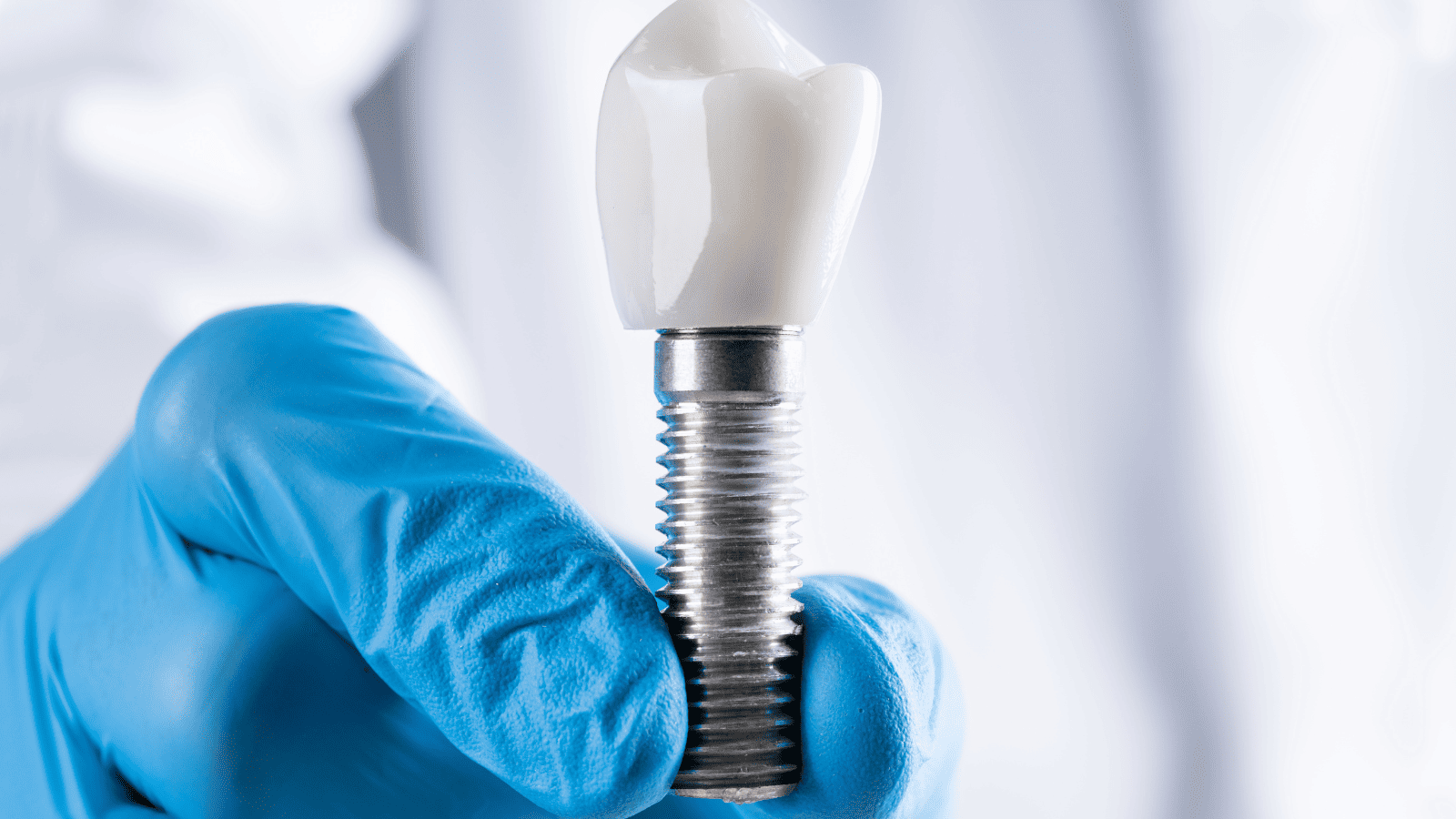
For decades, the management of severely compromised teeth has followed a predictable pattern.
When attachment loss approaches the apex, the tooth is often labeled “hopeless.” From there, the treatment pathway becomes almost reflexive: extraction, followed by implant placement or prosthetic replacement.
This approach is not without merit. It is structured, reproducible, and often successful.
But it is also built on an assumption that deserves re-examination:
That replacement is inherently more predictable—and therefore preferable—than preservation.
A long-term study presented at EuroPerio challenges this assumption in a meaningful way.
The study addressed a fundamental decision point in advanced periodontitis:
When a tooth is severely compromised, is it better to remove and replace it, or attempt to retain it through periodontal regeneration?
This is not a theoretical question. It sits at the intersection of:
prognosis
cost
patient preference
and long-term biological stability
Patients with Stage III–IV periodontitis and teeth exhibiting attachment loss extending to or beyond the apex were included—cases that many clinicians would traditionally consider non-restorable.
They were divided into two treatment strategies:
Periodontal regeneration (PR): attempting to rebuild lost supporting structures and retain the tooth
Tooth extraction and replacement (TER): implant placement or fixed bridge
The follow-up period extended to 20 years, providing rare insight into true long-term outcomes.
After two decades, both treatment pathways demonstrated high levels of success.
Only a small number of teeth were lost in the regeneration group
Only a small number of implants failed in the replacement group
In practical terms, both strategies proved durable over time.
This is important, because it shifts the conversation from:
“Which option works?”
to:
“Under what conditions does each option work best?”
One of the most significant implications of the study is that periodontal regeneration can, in selected cases, alter the prognosis of teeth previously deemed hopeless.
This is not simply about delaying extraction.
It is about achieving:
stable attachment levels
manageable probing depths
In other words, regeneration can convert a terminal prognosis into a maintainable one.
Clinical success is only one dimension of treatment planning.
Over a 20-year period, tooth preservation was shown to be significantly more cost-effective than extraction and replacement.
This remains true even when accounting for:
supportive periodontal care
maintenance visits
The economic implication is clear:
Preserving a tooth, when feasible, reduces long-term financial burden without compromising outcomes.
There is a deeper conceptual shift embedded in these findings.
Implant therapy represents a mechanical solution:
remove the compromised structure
replace it with a stable substitute
Periodontal regeneration, by contrast, is a biological solution:
attempt to restore the existing system
preserve native tissues
The study does not argue that one is universally superior.
It demonstrates that biological preservation can be as effective as mechanical replacement under the right conditions.
This is not an argument for indiscriminate tooth preservation.
Periodontal regeneration is:
technique-sensitive
case-dependent
and highly influenced by patient behavior
Successful outcomes are strongly associated with:
good systemic health
absence of smoking
meticulous oral hygiene
adherence to supportive periodontal therapy
Without these, the predictability of regeneration declines.
This is where clinical judgment remains critical.
The most meaningful takeaway from this body of work is not procedural—it is conceptual.
The traditional question:
“Is this tooth hopeless?”
is often reductive.
A more useful question is:
“Is this tooth a candidate for regeneration under controlled conditions?”
This reframing acknowledges that prognosis is not always fixed it can be modified.
The study does not diminish the role of implants.
Implants remain a highly effective solution, particularly when:
structural integrity is lost
regenerative potential is limited
However, what this evidence suggests is a shift in sequence:
Preservation should be evaluated first, not bypassed by default.
Extraction should be a considered decision, not an automatic one.
There is one aspect of this decision that is often underappreciated:
Extraction is irreversible.
Once the tooth is removed:
the biological system is altered
bone remodeling begins
Regeneration, even when not permanently successful, can:
extend the life of the tooth
delay more invasive interventions
This temporal advantage has clinical value.
The 20-year data does not suggest that all compromised teeth should be saved.
It suggests that more of them can be.
Both regeneration and replacement are valid, evidence-supported approaches.
But they are not interchangeable decisions.
They require:
careful diagnosis
realistic assessment of patient factors
When faced with a severely compromised tooth, the question is not simply what can be done.
It is what should be done first.
Because if the conditions allow it, preservation offers something replacement cannot:
The ability to maintain the natural system.
And if the decision were personal, that distinction would likely matter more than we admit.
| PRODUCTS | QTY | PRICE | VALUE in INR |
|---|
| PRODUCTS | QTY | PRICE | VALUE in INR |
|---|