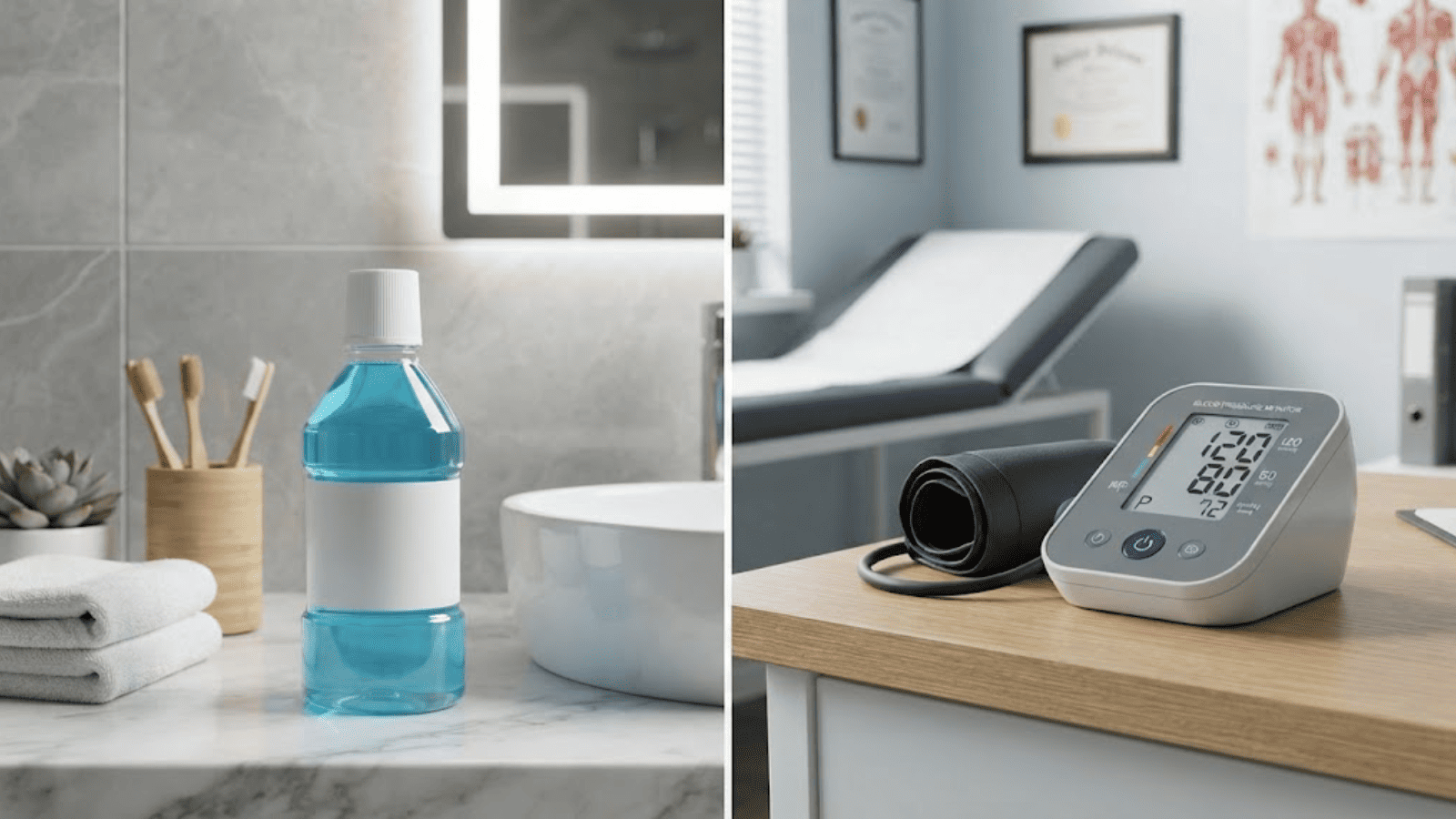
Dentists can be reassured by the current evidence: short-term chlorhexidine mouthwash use has not been shown to cause a clinically meaningful increase in blood pressure in predominantly healthy, normotensive adults. A 2026 systematic review and meta-analysis found no significant overall effect on either systolic or diastolic blood pressure.
Why was there concern in the first place?
Some oral bacteria help convert dietary nitrate to nitrite, contributing to nitric oxide pathways involved in vascular regulation. Because chlorhexidine suppresses oral bacteria, researchers have questioned whether its use could interfere with this pathway and increase blood pressure.
The review examined five human studies comparing chlorhexidine mouthwash with a control mouthwash or no mouthwash. Two individual studies reported significant increases in systolic and diastolic blood pressure. However, when the available data were pooled, the overall difference was not statistically significant.
For systolic blood pressure, the mean difference was +1.56 mmHg (95% CI −0.67 to 3.80; P=0.17). For diastolic blood pressure, it was −0.10 mmHg (95% CI −1.99 to 1.78; P=0.91).
The findings still need appropriate context. Only five studies were available, sample sizes were small, and chlorhexidine exposure generally lasted just 3–7 days. Participants were predominantly healthy and normotensive. The evidence therefore cannot be confidently extended to long-term use or to patients with hypertension, cardiovascular disease or greater medical complexity.
For everyday dental practice, however, the message is reassuring: current evidence provides no reason to avoid appropriately indicated short-term chlorhexidine mouthwash in normotensive patients because of concern about blood pressure. The biological question remains worth studying, particularly in higher-risk populations and with longer exposure, but the evidence available today does not demonstrate a clinically important blood-pressure effect.