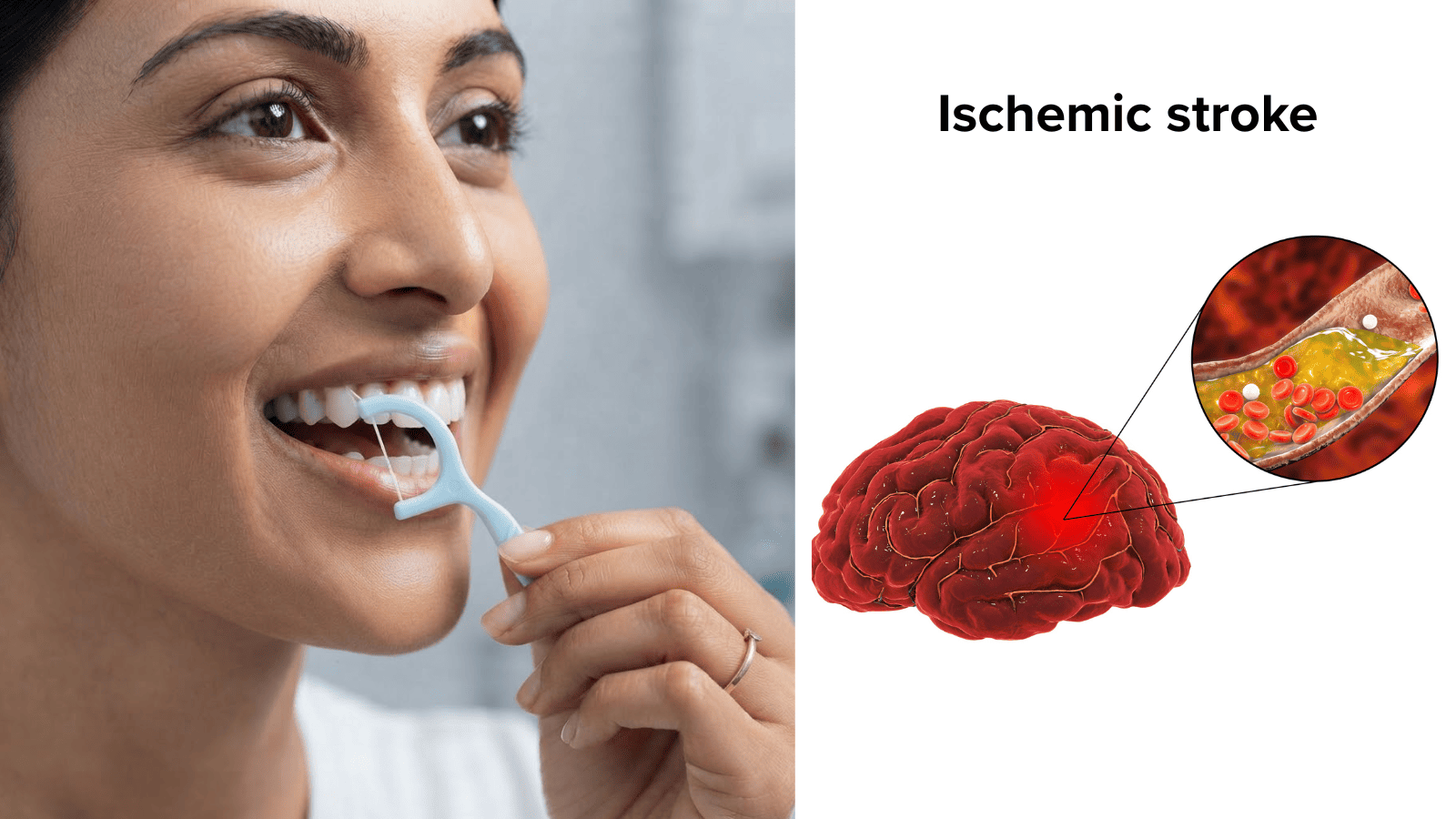
A large 2026 study involving nearly 100,000 adults found that people with more comprehensive oral-hygiene habits had a lower risk of ischemic stroke. The finding does not prove that toothbrushing, flossing or interdental cleaning prevents stroke, but it adds to growing evidence linking oral health behaviours with systemic health.
Researchers used data from the Korean National Health Insurance Service-Health Screening cohort. The study included 98,866 adults aged 40 years or older who underwent both general and oral health examinations in 2009–2010. Participants were followed from January 2011 through December 2019.
The most notable finding involved ischemic stroke.
Participants who brushed their teeth at least twice daily and regularly used both dental floss and interdental brushes had an adjusted hazard ratio of 0.77 for ischemic stroke compared with participants with poorer oral-hygiene practices. This represents a 23% lower relative hazard. The researchers also observed a significant dose-response relationship across categories of oral-hygiene behaviour.
The result should be interpreted carefully. This was a retrospective observational study, and oral-hygiene practices were self-reported. It therefore demonstrates an association, not causation. People who maintain better oral hygiene may differ in other ways that influence cardiovascular health, even when statistical adjustment is applied.
For dentists, the practical message is encouraging. Regular toothbrushing and interdental cleaning already have important oral-health benefits. This large cohort suggests that comprehensive oral hygiene may also be associated with a lower risk of ischemic stroke.
The evidence does not justify telling patients that flossing will prevent stroke. It does, however, strengthen the case for viewing oral hygiene as part of overall health—not simply oral cleanliness.