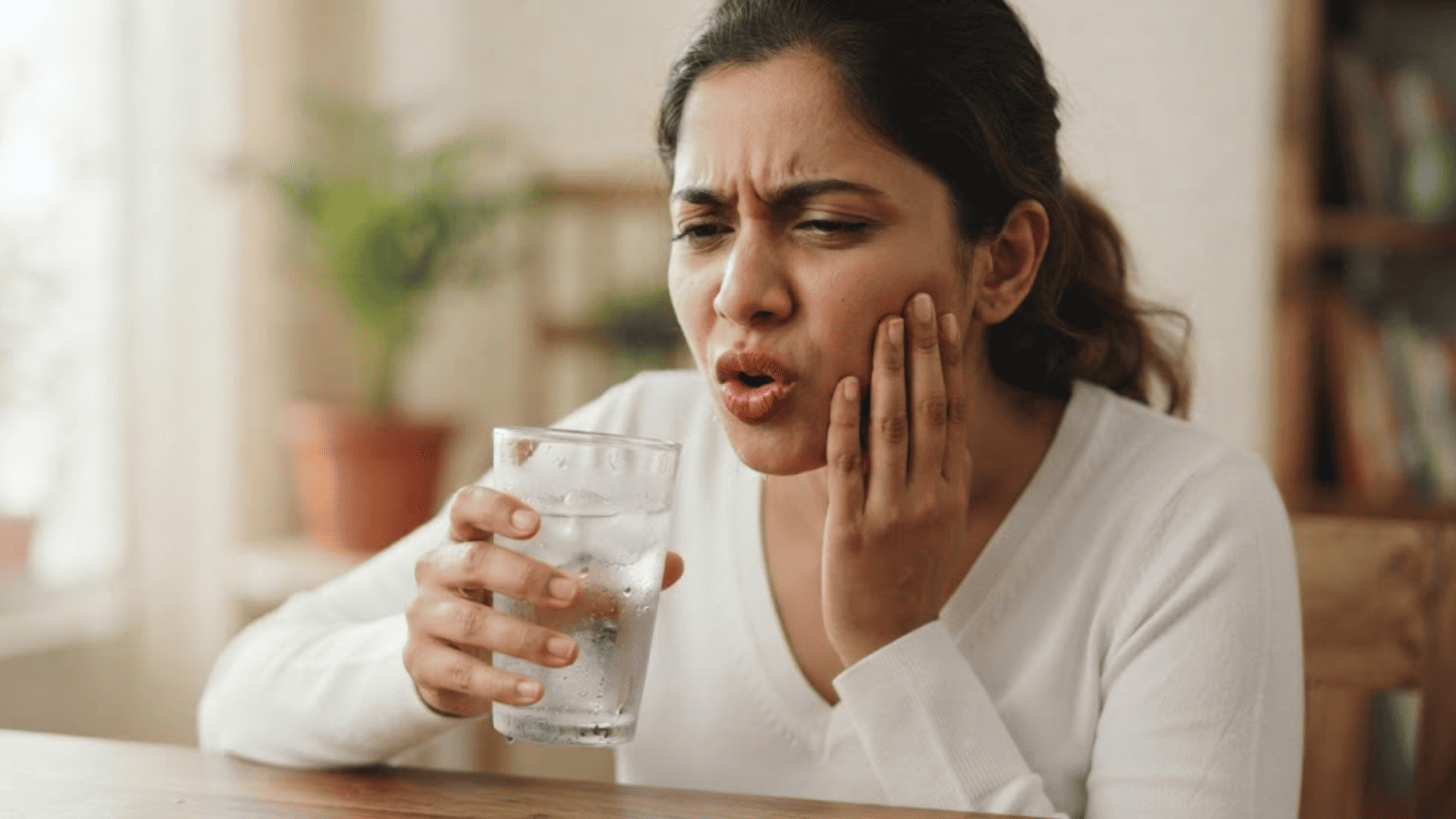
A new randomized clinical trial offers encouraging evidence for dentists managing dentin hypersensitivity. A toothpaste containing 5% novel bioactive glass plus 1425 ppm sodium fluoride reduced airblast sensitivity more than a toothpaste containing 1425 ppm sodium fluoride alone over two weeks.
This was a first-in-human, double-blind, randomized, parallel-arm proof-of-concept study involving 46 adults with self-reported and clinically confirmed dentin hypersensitivity.
The primary outcome was the Schiff Airblast Sensitivity Score. After 14 days, the bioactive-glass group showed a greater mean reduction than the fluoride-only group: −0.8 versus −0.5, a statistically significant between-group difference (p=0.0341).
An earlier difference appeared in patient-reported pain. After just two days, Visual Analog Scale scores improved by −1.03 in the test group compared with +0.04 in the control group (p=0.0057), suggesting relatively rapid symptom relief.
Tactile sensitivity also improved more numerically with the bioactive-glass toothpaste, but the difference between groups did not reach statistical significance (mean change 13 versus 3 g; p=0.068).
Both toothpastes were reported to have comparable safety profiles during the study, with no severe adverse events.
The findings are promising, but they should not be overextended. This was a small proof-of-concept trial with only 46 participants and a follow-up of two weeks. It therefore cannot establish long-term effectiveness, durability of relief, or long-term safety.
For dentists, the practical message is encouraging: this specific 5% bioactive-glass formulation, added to conventional fluoride toothpaste, produced greater short-term improvement in airblast hypersensitivity and early patient-reported pain than fluoride toothpaste alone.
Larger and longer clinical trials are now needed to determine whether these benefits persist over time.