


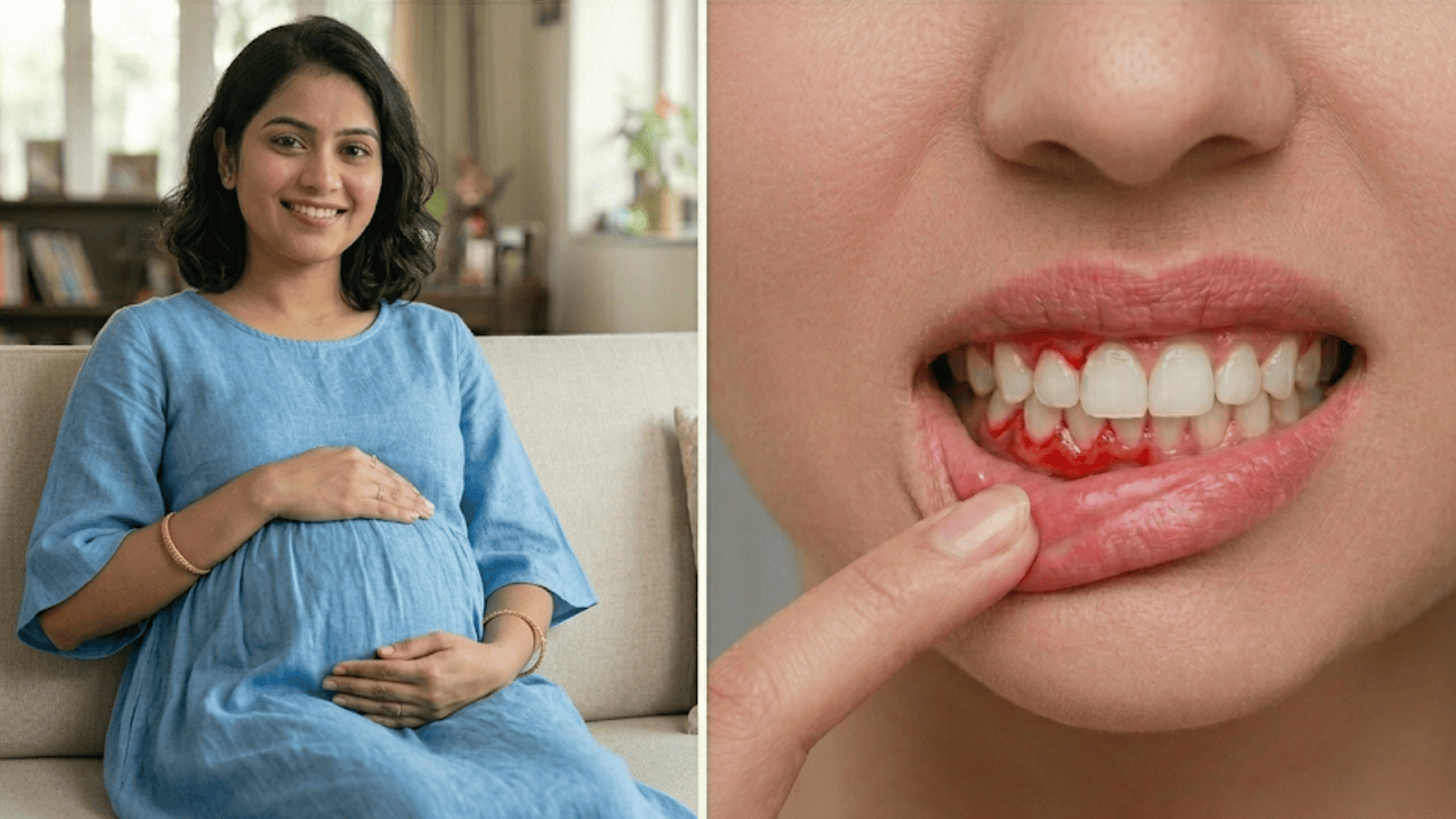
Pregnancy is associated with profound hormonal changes that can significantly influence periodontal health. Even in women without periodontitis, elevated levels of estrogen and progesterone can amplify the gingival inflammatory response to dental plaque, resulting in pregnancy-associated gingivitis.
Gingival bleeding is among the most common oral manifestations of pregnancy and can affect a substantial proportion of expectant mothers. Despite its prevalence, oral health remains an underemphasized component of routine antenatal care in many healthcare settings.
A recent multicentre randomized controlled trial published in the Journal of Clinical Periodontology (2026) provides strong evidence that a simple preventive intervention—daily use of calibrated interdental brushes combined with individualized oral hygiene instruction—can substantially reduce gingival bleeding during pregnancy
Pregnancy-associated gingivitis is characterized by:
Importantly, pregnancy itself does not cause gingivitis in the absence of dental biofilm. Rather, hormonal changes modify the host response, making gingival tissues more susceptible to inflammation in the presence of plaque accumulation.
This makes effective plaque control a key preventive strategy throughout pregnancy.
Researchers conducted a multicentre randomized controlled trial involving 323 nulliparous women who were:
Although participants had no periodontitis, many already exhibited gingival inflammation, as reflected by a mean baseline bleeding-on-probing (BOP) score of approximately 56%.
This report represents a secondary analysis of a larger randomized controlled trial, examining the impact of interdental cleaning on pregnancy-associated gingival inflammation.
Participants were randomly assigned to one of two groups:
Intervention Group
Control Group
Participants were evaluated at one week, four months, five months, and eight months after enrollment.
The primary outcome was the evolution of bleeding on probing (BOP), a widely accepted clinical marker of gingival inflammation.
The intervention produced substantial improvements in gingival health.
Overall Improvement
By the eighth month of pregnancy:
Longitudinal analysis confirmed that the improvement was maintained throughout pregnancy.
One of the most clinically relevant findings was the speed of improvement.
More than half of the total reduction in bleeding occurred during the first week following the introduction of interdental brushing.
This suggests that pregnancy-associated gingival inflammation can respond remarkably quickly when interdental plaque control is improved.
Participants presenting with severe baseline bleeding (>81% bleeding sites) experienced the most pronounced improvements.
This finding suggests that patients with the highest inflammatory burden may derive particularly substantial benefits from targeted interdental hygiene measures.
The investigators performed multivariable analyses to identify factors associated with bleeding reduction.
Within the study model, daily interdental brushing emerged as the strongest independent predictor of improvement (OR = 3.14; 95% CI: 2.01–4.90).
These findings reinforce the importance of plaque control in interdental areas, which are often inadequately cleaned by toothbrushing alone.
A key strength of this study is that the intervention was not simply the distribution of interdental brushes.
Participants received:
Therefore, the findings support a personalized interdental hygiene approach, rather than a one-size-fits-all recommendation.
The observed benefits likely reflect both:
Clinicians should also remember that interdental brushes are not universally suitable for every patient. Appropriate brush selection should be based on interdental anatomy and individual clinical assessment.
For dental professionals involved in maternal healthcare, these findings highlight a practical opportunity to improve oral health during pregnancy.
Introducing individualized interdental hygiene instruction early in pregnancy may:
Importantly, this approach is:
Although all participants were considered at increased risk of preeclampsia, the study was designed to evaluate periodontal outcomes—not obstetric outcomes.
Therefore, these results should not be interpreted as evidence that interdental brushing reduces the incidence of preeclampsia or improves pregnancy outcomes.
The demonstrated benefit relates specifically to the reduction of gingival inflammation as measured by bleeding on probing.
This study adds high-quality evidence to the growing body of literature supporting interdental cleaning as an essential component of plaque control.
The findings suggest that when appropriately sized interdental brushes are introduced early in pregnancy and accompanied by individualized instruction, significant improvements in gingival health can be achieved rapidly and maintained throughout gestation.
Because the study population consisted of nulliparous women at elevated risk of preeclampsia, further research will help determine the extent to which these findings can be generalized to broader pregnant populations.
As clinicians, we routinely emphasize toothbrushing as the foundation of oral hygiene. This trial serves as a timely reminder that the interdental area remains a critical—and often under-addressed—site for biofilm control, particularly during periods of heightened gingival susceptibility such as pregnancy.
Carrouel F, Kanoute A, Faye D, Mazur M, Perrier H, Vitiello F, Ardan R, Clément C, Lan R, Bourgeois D. Impact of Interdental Brushing on Pregnancy-Associated Gingivitis: A Secondary Analysis of a Randomised Controlled Trial. J Clin Periodontol. 2026 Apr;53(4):539-549. doi: 10.1111/jcpe.70085. Epub 2026 Jan 20. PMID: 41558746; PMCID: PMC12972602.
In pregnant women with an intact periodontium, individualized instruction and daily use of appropriately sized interdental brushes significantly reduced gingival bleeding. Incorporating personalized interdental hygiene measures into antenatal oral healthcare may offer a simple, low-cost strategy for managing pregnancy-associated gingival inflammation.
| PRODUCTS | QTY | PRICE | VALUE in INR |
|---|
| PRODUCTS | QTY | PRICE | VALUE in INR |
|---|