


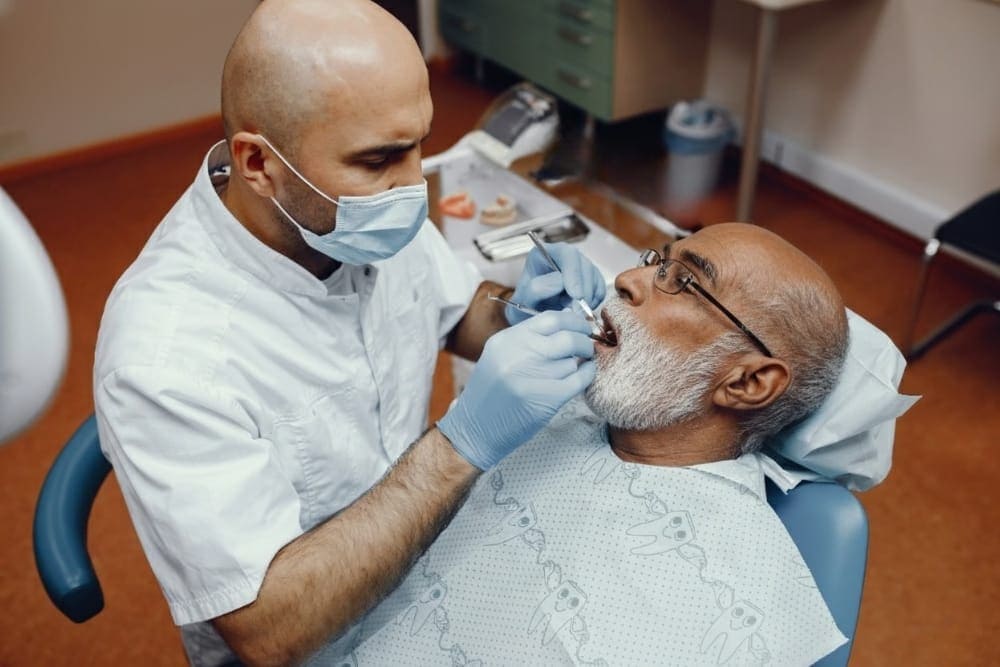
Dental clinicians often associate the geriatric appointment with complex restorative needs root caries, abfraction, and loose dentures. However, a 2025 retrospective study by Sharma et al. serves as a stark reminder that in high-risk populations, the most critical pathology is often on the mucosa.
The study analyzed 354 elderly patients (aged ≥60) presenting to a tertiary dental hospital in India. The headline statistic is sobering: 54.7% of these patients presented with at least one oral mucosal lesion (OML).
While this prevalence is skewed by the hospital setting (where patients are often referred because of symptoms), the distribution of these lesions offers a critical roadmap for what clinicians must look for during examinations.
The study identified a massive burden of premalignant and malignant conditions. When you combine the top findings, the risk profile becomes clear:
1. Leukoplakia (19.5%): The most common finding. This high prevalence is a “geographic fingerprint” of the cohort, likely driven by smokeless tobacco (betel quid) habits specific to the region.
2. Lichen Planus (17.8%): A close second.
3. Malignancy (13.0%):
Denture Stomatitis was found in only 9.0% of the total sample.
The study found a strong, statistically significant association between Tobacco Use and Denture Wearing with lesions. Interestingly, there was no significant association with systemic diseases (diabetes/hypertension) or gender.
The researchers observed that lesion prevalence actually declined in patients over 80 years old.
Geriatric dentistry is more than maintaining function; it is about active surveillance. With a high prevalence of Potentially Malignant Disorders (PMDs) in the elderly, the soft tissue exam is a high-yield diagnostic procedure. The data confirms that tobacco cessation and denture hygiene are the two most impactful preventive conversations you can have with your elderly patients before a “patch” becomes a “problem.”
Sharma K, Chaturvedi M, Dubey R, Choudary NS, Bajana P, Voulligonda D, Tiwari HD. Prevalence of oral mucosal lesions among elderly Indian patients: A retrospective study. Bioinformation. 2025 Sep 30;21(9):3401-3403. PMID: 41466643; PMCID: PMC12744486.
| PRODUCTS | QTY | PRICE | VALUE in INR |
|---|
| PRODUCTS | QTY | PRICE | VALUE in INR |
|---|