


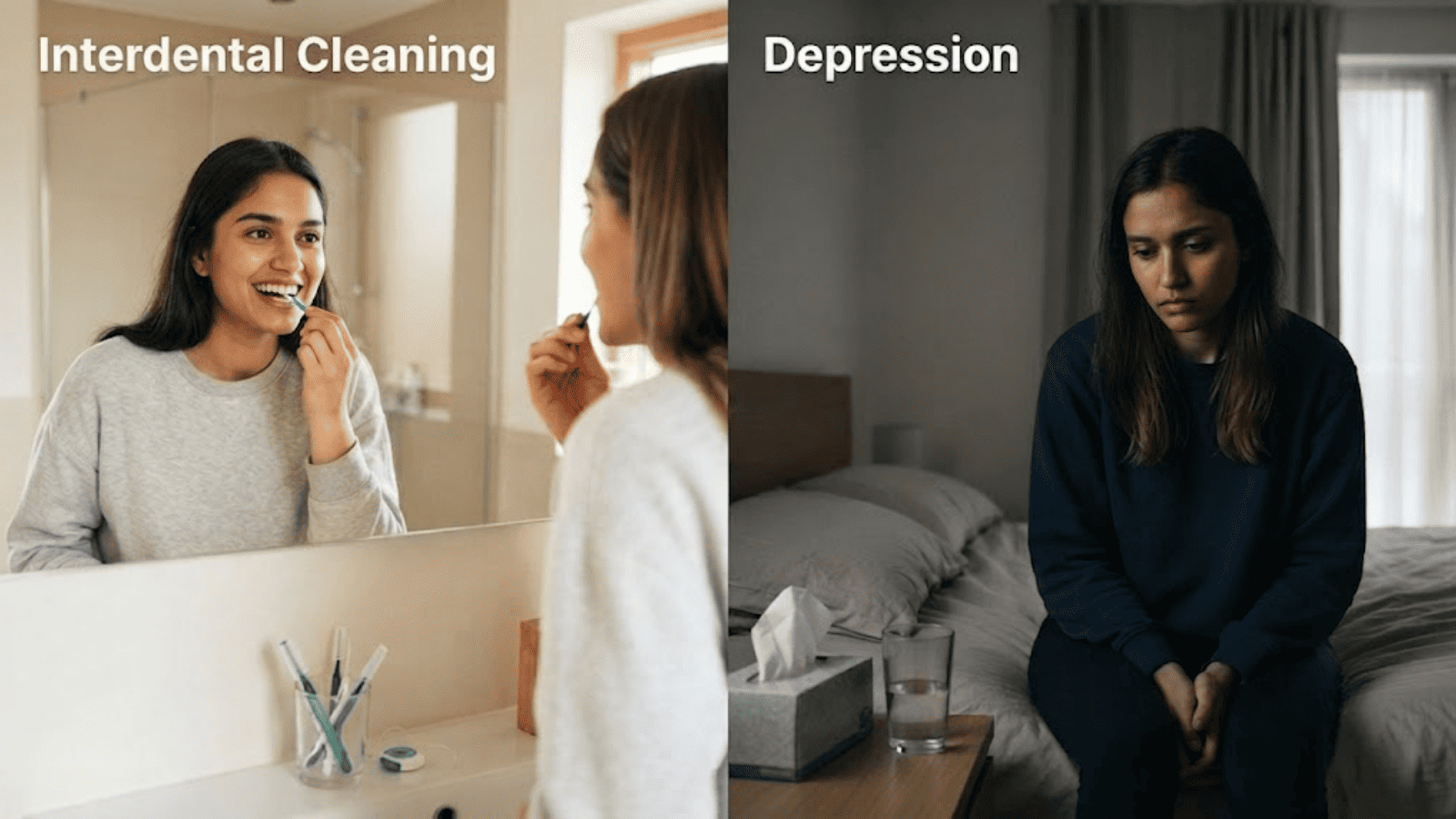
Could cleaning between teeth be linked to mental health? An accepted, unedited study in BMC Oral Health found that US adults who reported more frequent interdental cleaning were less likely to screen positive for depression. Interesting? Yes. Proof of prevention? No.
Researchers conducted a survey-weighted analysis of five NHANES cycles from 2009-2018, representing non-institutionalized US adults. Of 49,693 potential participants, 17,250 had the exposure, outcome and covariate data required for analysis. This complete-case selection may introduce bias. Depression was measured with the PHQ-9; a score of 10 or above defined the outcome. That is a screening classification, not a confirmed psychiatric diagnosis.
Participants answered how many days during the week they had used dental floss “or any other device” to clean between their teeth. Therefore, the exposure is best described as interdental cleaning, not floss alone. Eight percent screened positive for depression.
After adjustment for demographic, socioeconomic, lifestyle and health variables, each additional cleaning day was associated with 4.6% lower odds of depression (OR 0.954; 95% CI 0.931-0.978; P<0.001). Cleaning on at least five days was associated with 26.5% lower odds versus no cleaning (OR 0.735; 95% CI 0.619-0.872; P<0.001). The one-to-four-day category, however, was not statistically significant after full adjustment. PHQ-9 scores were also slightly lower among more frequent cleaners.
Restricted cubic spline analysis suggested a linear pattern without a clear threshold. Yet confidence intervals widened at the frequency extremes, so the exact shape is uncertain.
Several explanations remain possible. Interdental cleaning may support periodontal health and reduce inflammatory burden. Better oral comfort, nutrition and social confidence could also matter. Conversely, depression may reduce energy, motivation and self-care. Frequent cleaning may simply mark greater income, education, healthcare access or healthier habits.
The crucial limitation is timing. This cross-sectional study measured behaviour and depressive symptoms within the same survey period. It cannot establish which came first, demonstrate causation or show that changing oral hygiene improves mental health. Both behaviours were self-reported, unmeasured confounding may remain, and results may not apply outside the US or to institutionalized and clinical populations.
For dental teams, the message is practical but restrained: recommend personalized interdental cleaning for oral-health indications. If self-care declines, consider a compassionate conversation and appropriate screening or referral. Floss is not an antidepressant. The study instead shows how everyday oral behaviours might provide a useful window into whole-person health—and why further prospective research is needed.
| PRODUCTS | QTY | PRICE | VALUE in INR |
|---|
| PRODUCTS | QTY | PRICE | VALUE in INR |
|---|