


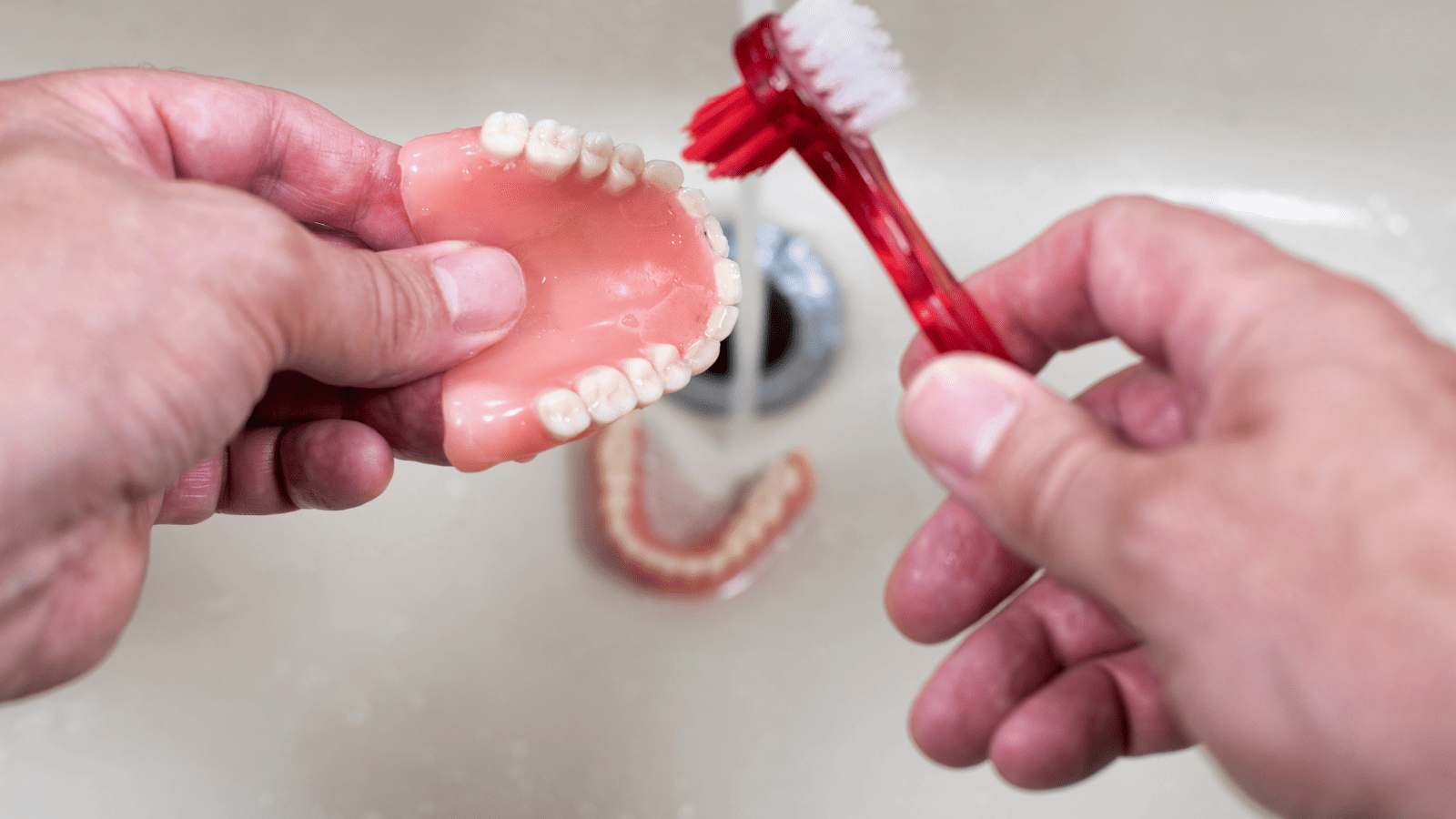
Effective denture hygiene requires more than removing visible deposits. A cleaning method should reduce microbial contamination while limiting unwanted changes to the prosthetic material. However, surface roughness and microbial adhesion are separate outcomes; neither should be used as a substitute for the other.
A 2026 in vitro comparative study examined 120 acrylic resin specimens—not patients. Three materials were tested: a heat-polymerised denture base resin, an autopolymerised repair resin and a hard reline material. Each was assigned to four cleaning conditions: distilled water as the control, brushing, electrolysed water and one alkaline peroxide effervescent tablet. The resulting 12 subgroups contained 10 specimens each.
Surface roughness was measured with a contact profilometer before cleaning and after 7, 30 and 90 days. Candida albicans adhesion was assessed as colony-forming units per millilitre. The 90-day period represents laboratory testing, not clinical follow-up.
Roughness values across the three materials decreased significantly after 30 and 90 days (P<0.001). However, this overall time-related finding does not establish that every cleaning method improved the surface or that one method was universally superior. The cleaning procedure affected the heat-polymerised resin at 90 days (P<0.001), the autopolymerised resin at 90 days (P=0.002), and the hard reline material at all assessed intervals.
The clearest microbiological result concerned the tested alkaline peroxide tablet. Candida adhesion was significantly lower with this procedure across all three materials (P<0.001). This supports an effect on adhesion under the study conditions; it should not be described as proof of clinical antifungal efficacy.
The authors considered electrolysed water a possible alternative to mechanical cleaning when surface roughness was the focus, but stated that its Candida-removal performance required improvement. Importantly, the study did not report that a smoother surface caused lower Candida adhesion. It showed that cleaning methods could perform differently across two distinct outcomes.
The most defensible conclusion is therefore modest: among the materials and procedures tested, the alkaline peroxide tablet produced the lowest Candida adhesion, while surface effects varied by material and time. Clinical recommendations should integrate these findings with manufacturer instructions, broader evidence, individual patient factors and the prosthesis’s clinical condition.
Başkent GY, Aydoğan Ayaz E, İnan C. Effects of different denture cleaning procedures on denture surface and Candida albicans adhesion. J Prosthet Dent. 2026 Jul;136(1):e299-e304. doi: 10.1016/j.prosdent.2025.12.045. Epub 2026 Jan 30. PMID: 41620354.
| PRODUCTS | QTY | PRICE | VALUE in INR |
|---|
| PRODUCTS | QTY | PRICE | VALUE in INR |
|---|