


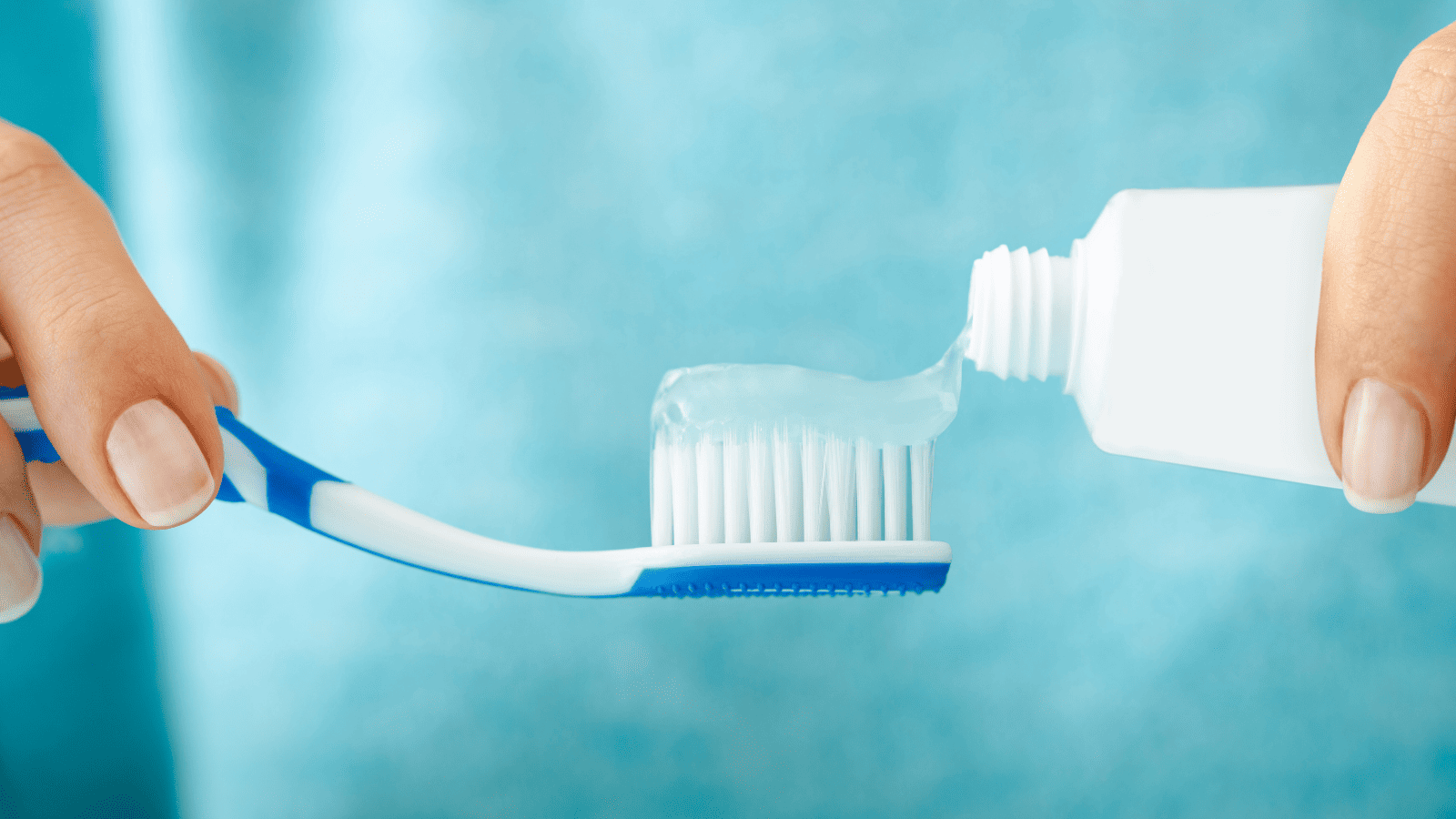
A recent randomized clinical trial investigated whether whitening dentifrices can maintain tooth-colour changes and
reduce sensitivity after in-office bleaching. Its findings are clinically interesting, but they require careful interpretation.
Published in the Journal of Esthetic and Restorative Dentistry, the studyincluded 120 adults who completed a standardized bleaching procedure using 40% hydrogen peroxide. Participants were then randomly assigned—20 per group—to use one of six commercially available dentifrices twice daily for three months.
One conventional dentifrice served as the control. The five whitening dentifrices used different combinations of abrasives, blue covarine, charcoal, polyphosphates or an oxygen-releasing compound. One whitening formulation also contained potassium nitrate as a desensitizing ingredient.
Tooth colour was measured objectively with a spectrophotometer before bleaching, immediately afterwards, and at one week, one month and three months.
At every individual assessment, colour change did not differ significantly between the six groups. The study therefore did not demonstrate that any whitening dentifrice preserved bleaching results better than the conventional dentifrice.
The groups did, however, show different colour-change patterns over time. In the control group, the mean colour difference from baseline—expressed as ΔE —declined from 9.34 immediately after bleaching to 7.16 at three months. This within-group reduction was statistically significant. None of the five whitening groups showed a significant change over the same period, and the overall interaction between time and dentifrice group was significant.
This pattern is compatible with greater early colour stability in the whitening groups, but it does not establish their superiority. A significant change within one group and no significant change within another is not, by itself, proof of a difference between them. Moreover, the authors did not report an exact interaction effect size or confidence interval.
Sensitivity was greatest during the first 24–48 hours after bleaching and declined substantially in every group. At Day 7, the median sensitivity score was zero across all groups, although this does not necessarily mean that every participant was symptom-free.
The potassium-nitrate-containing dentifrice produced the strongest early result. At 24 hours, its median sensitivity score was 1 on a 0–10 scale, compared with medians of 3–4 in the other groups. It was significantly lower than every comparator at this assessment. Differences remained at 48 hours, when this formulation was lower than several—but not clearly all—other groups. No significant group differences remained at Day 7.
Because a complete commercial formulation was tested, the benefit cannot be attributed to potassium nitrate alone.
The study provides a credible signal that the tested desensitizing dentifrice improved early post-bleaching comfort. Its evidence for colour maintenance is less conclusive.
Interpretation is limited by the small sample per group, three-month follow-up, retrospective trial registration, unblinded participants,
unmonitored adherence and the testing of only one product per formulation category. Eight patients who developed excessive sensitivity during bleaching were also excluded before randomization, so the findings may not fully represent highly sensitive patients.
Interpretation is limited by the small sample per group, three-month follow-up, retrospective trial registration, unblinded participants,
unmonitored adherence and the testing of only one product per formulation category. Eight patients who developed excessive sensitivity during bleaching were also excluded before randomization, so the findings may not fully represent highly sensitive patients.
Clinicians can reasonably consider a potassium-nitrate-containing dentifrice to improve short-term patient comfort after in-office bleaching, while recognizing that this study tested a complete commercial formulation and cannot isolate the effect of potassium nitrate alone.
However, patients should not be promised that whitening toothpaste will preserve bleaching results better than conventional toothpaste without stronger, longer-term comparative evidence.
Gok A, Koprucuogullari B. Effect of whitening dentifrices on short-term color stability and tooth sensitivity after in-office bleaching: a randomized singleblind clinical trial. J Esthet Restor Dent. 2026:1-11. doi:10.1111/jerd.70241.
| PRODUCTS | QTY | PRICE | VALUE in INR |
|---|
| PRODUCTS | QTY | PRICE | VALUE in INR |
|---|