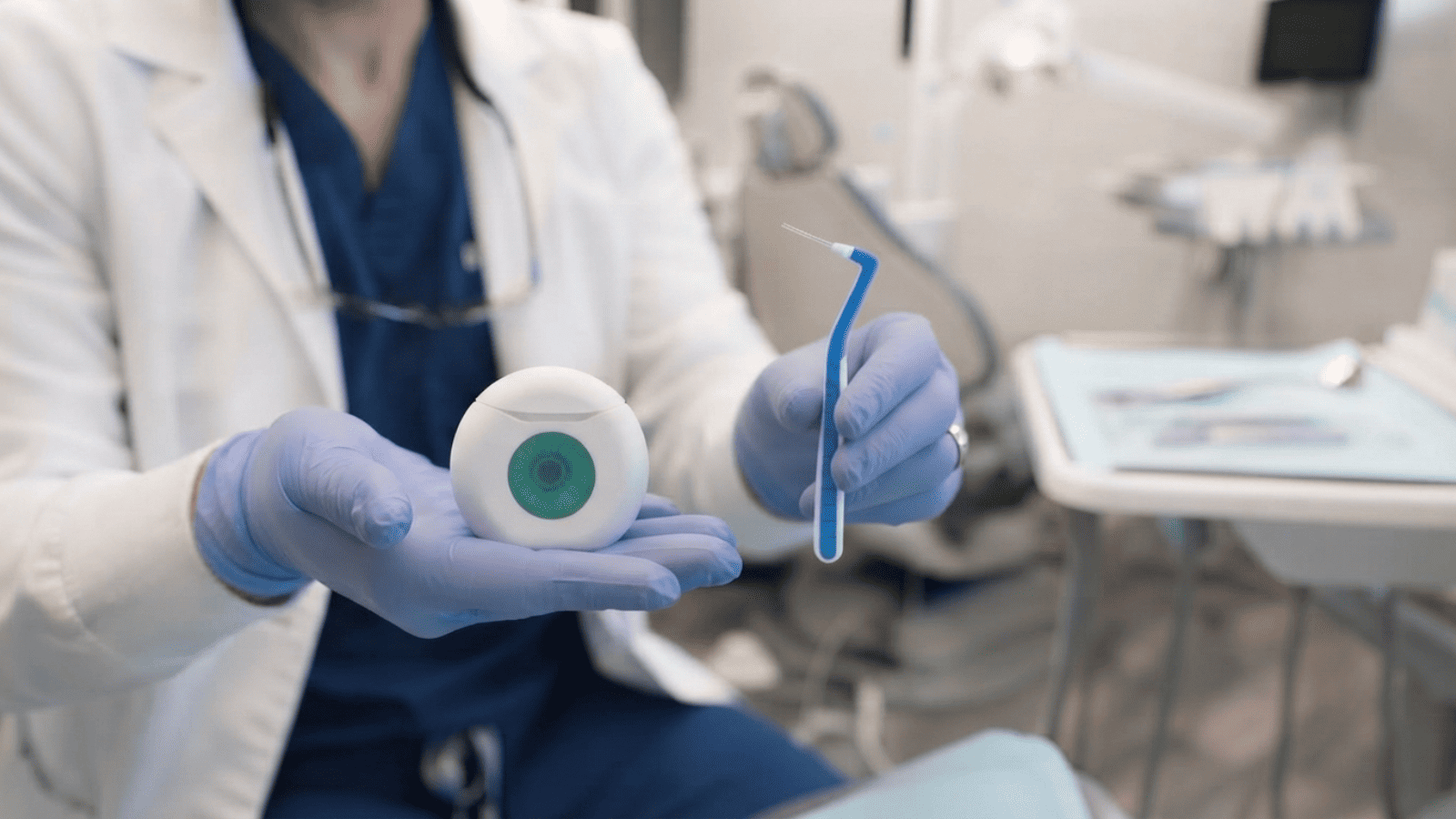
Floss or interdental brush: Which should dentists recommend—and when?
Interdental cleaning has traditionally been associated with dental floss. Current evidence supports a more individualised approach: the choice of device should be guided by the anatomy of the interdental space, periodontal status, dexterity, and the patient’s ability to use it consistently.
How did these devices develop?
Dental floss is generally attributed to New Orleans dentist Levi Spear Parmly, who promoted silk thread during the nineteenth century for cleaning surfaces that toothbrushes could not reach. Commercial production began in 1882. Nylon floss became available after the Second World War, providing greater strength and resistance to fraying.
The origins of interdental brushes are less clearly documented. Twisted and spiral brushes emerged during industrialisation and were later adapted for inaccessible dental surfaces. Clinical studies from the 1970s onward helped establish their role in interdental plaque removal and periodontal care.
What does the evidence indicate today?
Floss remains appropriate for tight contacts and small embrasures where an interdental brush cannot pass without trauma. Its effectiveness is highly technique-dependent, and many patients find regular flossing difficult. Systematic reviews have reported weak, inconsistent, or very-low-certainty evidence for recommending self-performed flossing universally to adults for plaque and gingivitis control.
This does not mean that floss has no clinical value. It means that it should be selected for suitable sites rather than prescribed automatically to every patient. When the interdental space permits, interdental brushes are generally preferred. Used alongside toothbrushing, they have shown improvements in plaque, bleeding, and probing indices compared with floss, particularly in open interdental spaces. A systematic review also found that most study participants preferred interdental brushes because they considered them simpler to use.
A practical chairside rule
Use floss where contacts are too tight for atraumatic passage of an interdental brush. Where space permits, select a brush whose size and shape match the interdental anatomy, and demonstrate its correct use.
The future of interdental care lies in personalised, evidence-based device selection—not in recommending one device universally.
Reference:
van der Weijden F. The Journey of Oral Hygiene: The Past, the Present, the Future. J Periodontal Res. 2026 Jul 6. doi: 10.1111/jre.70136. Epub ahead of print. PMID: 42403267.